Editor
Wall Street Rattled: Trump’s Credit Card Gambit and a Retail Reality Check
NEW YORK — The relative calm on Wall Street evaporated Tuesday as a whirlwind of populist policy proposals and lukewarm retail forecasts triggered a fresh wave of market volatility. Investors, already on edge, spent the day recalibrating portfolios as the White House set its sights on the banking sector’s most profitable corner: high-interest consumer debt.
The catalyst for the sell-off was President Donald Trump’s call for a temporary 10% cap on credit card interest rates. While the proposal aims to provide relief to American households, the reaction from the financial sector was swift and bruising.
Banks Bleed as Rate Caps Loom
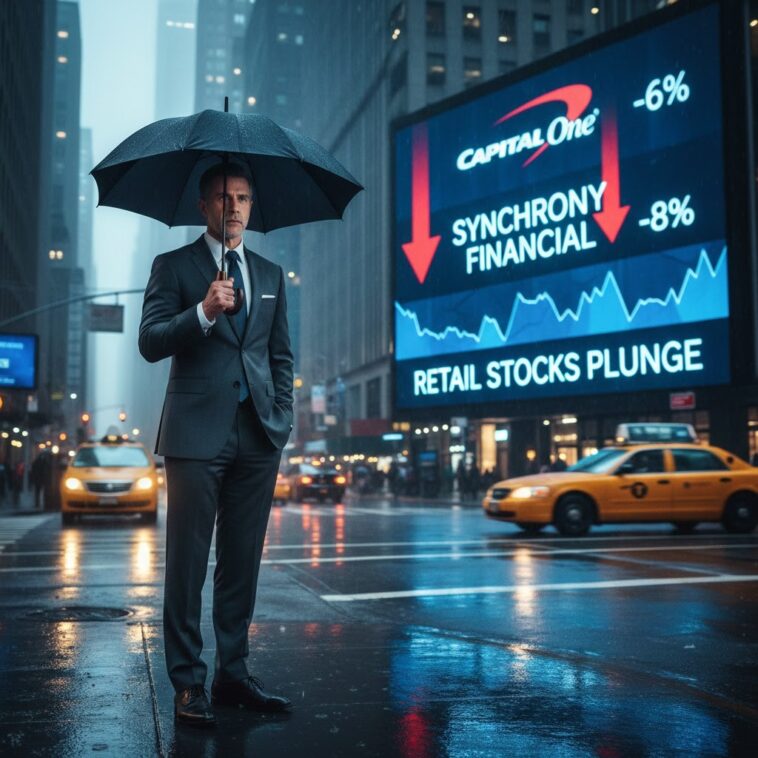
The prospect of a federally mandated ceiling on lending sent shockwaves through credit card issuers. Capital One slid 6%, while Synchrony Financial—heavily exposed to store-brand cards—tumbled 8%. Even the “Big Three”—JPMorgan Chase, Bank of America, and Wells Fargo—weren’t immune, each shedding nearly 2%.
“This isn’t just a haircut; for some of these lenders, it’s a total reshaping of their risk models,” said Helena Vance, a senior equity analyst at Silverton Capital. “If you cap the upside on high-risk lending but the default risk remains the same, the math simply stops working for the private sector.”
Even the “Buy Now, Pay Later” darling, Affirm, found no shelter. Despite initial speculation that shoppers might flee to alternative lenders, Affirm reversed its early gains to close down 5%.
A Blue Holiday for Teen Apparel
Retailers also struggled to keep their heads above water. A string of holiday “pre-announcements” suggested that while consumers were still spending, they weren’t doing so at the margins investors had hoped for.
Abercrombie & Fitch took the hardest hit, cratering nearly 17% after narrowing its guidance. Urban Outfitters and American Eagle followed suit, dropping 10% and 7% respectively. It seems the “cool kid” premium didn’t translate into holiday gold this year, dragging down legacy names like Macy’s and Gap in a sympathy sell-off.
Bright Spots: Lithium and Life Sciences
Amidst the sea of red, the “green” economy and biotech provided some much-needed buoyancy. Lithium producers enjoyed a rare rally after Scotiabank analysts turned bullish, predicting a bottom for the battery metal. Lithium Americas surged 9%, while industry heavyweight Albemarle climbed 5%.
In the healthcare space:
Beam Therapeutics skyrocketed 28% after a regulatory breakthrough with the FDA regarding its genetic disease program.
Dexcom rose 5% on a robust 2026 forecast, signaling continued dominance in the glucose monitoring market.
Abivax jumped on rumors that Eli Lilly might be eyeing a $17.5 billion takeover, provided the French government doesn’t stand in the way.
Geopolitics and Blue-Chip Shifts
The energy sector provided its own drama. Exxon Mobil slipped 1% after the President threatened to block the company from the Venezuelan market, accusing the oil giant of “playing too cute” regarding a return to the region.
Conversely, Walmart hit an all-time intraday high. The retail behemoth gained 3% on the news that it will join the Nasdaq-100, a move that will force index-tracking ETFs like the QQQ to buy up billions in shares.
As we head into the back half of the week, the question remains whether this market volatility is a temporary reaction to rhetoric or the beginning of a deeper repricing of regulatory risk. If the White House continues to target specific industry margins, the “Trump Trade” may become a lot more complicated than investors originally bargained for.