Editor
In a trading session defined by aggressive state intervention and record-breaking commodity runs, market volatility became the primary narrative on Monday. While the indices showed a calm surface, the underlying currents revealed a massive reshuffling of capital toward “national security” assets—ranging from critical minerals to the silicon foundations of artificial intelligence.
The Return of Industrial Policy
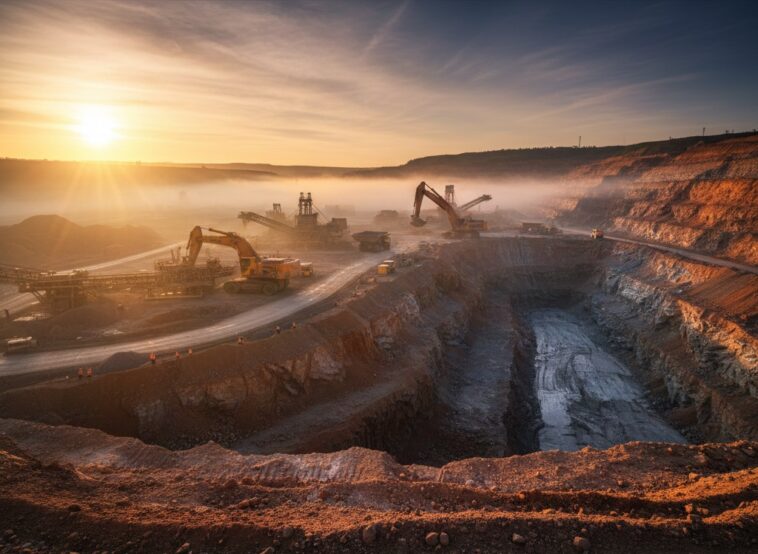
The day’s most significant move centered on USA Rare Earth, which saw its stock price soar by over 21%. The catalyst was a rare direct equity stake from the Trump administration, a move that effectively turns a private mining concern into a cornerstone of U.S. industrial strategy. By issuing 16.1 million shares and 17.6 million warrants, the company has secured a massive capital injection with the highest possible backing.
“We are seeing the birth of ‘Fortress Economics,'” says Arthur Blankenship, a policy analyst at the Global Resource Group. “When the federal government takes a stake this significant, the market stops looking at P/E ratios and starts looking at strategic longevity. It’s a total game-changer for the rare earths sector.”
Gold’s Historic Flight
The precious metals market provided another anchor for investors fleeing broader market volatility. Gold prices shattered records, climbing above $5,100 for the first time in history. This “yellow fever” lifted the entire sector:
Newmont: Gained 4% on the back of the spot price surge.
Allied Gold: Rose 3% following a blockbuster C$5.5 billion cash acquisition by Hong Kong-based Zijin Gold.
Hecla Mining: Jumped 5.5% after reporting 2025 silver production at the absolute ceiling of its guidance.
A Tale of Two Techs: AI and Quantum
While commodities were hot, the tech sector saw a stark divide between pure growth and operational reality. Nvidia’s $2 billion reinvestment into CoreWeave sent the AI cloud provider up 10%, a clear signal that the “AI Factory” buildout—aiming for 5 gigawatts by 2030—is still the market’s favorite long-term bet.
In contrast, the solar sector felt the sting of a cooling labor market. Enphase Energy dropped 2% after announcing a 5% workforce reduction. It’s a sobering reminder that even in a high-tech economy, the transition to renewables isn’t immune to the pressures of high interest rates and operational overhead.
Turbulence in the Skies
Finally, the “real-world” economy faced a literal storm. A severe winter weather system across the U.S. sent airline stocks into a tailspin. United and American Airlines both shed nearly 1%, with Delta and Southwest following suit. With thousands of flights in jeopardy, the sector remains the most sensitive to the immediate physical disruptions of the season.