Editor
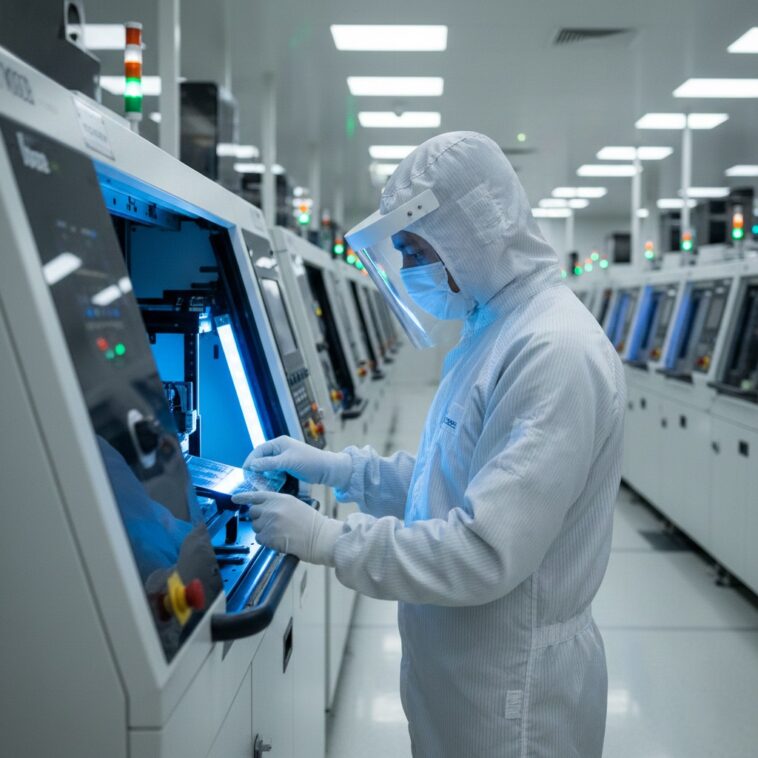
The narrative on Wall Street shifted Tuesday from broad macroeconomic jitters to the granular, high-stakes world of market movers and earnings results, as a reported manufacturing pivot by Nvidia sent shockwaves through the semiconductor sector.
Intel Corp. emerged as the session’s unlikely protagonist, with shares climbing more than 11%. The catalyst? A report from DigiTimes suggesting that Nvidia—the undisputed king of the AI era—plans to shift some of its chip production from Taiwan Semiconductor Manufacturing Co. (TSMC) to Intel’s foundries by 2028. While TSMC shares remained resilient with a 1% gain, the move signals a potential sea change in the global supply chain.
“If Intel can actually execute on this, it’s a massive vote of confidence from the one company that matters most right now,” said Marcus Thorne, a senior equity analyst at NorthStone Group. “But 2028 is a long way off. In this industry, that’s practically a lifetime.”
Mixed Signals in the Semiconductor Space
The chip sector wasn’t all green screens, however. ASML, the Dutch linchpin of chip-making equipment, saw its U.S.-listed shares slip 2% after a volatile morning. Despite reporting record orders and dangling a 12-billion-euro buyback program in front of investors, the market seemed to have already priced in the “AI gold rush” optimism.
In contrast, Texas Instruments surged 9% after its first-quarter outlook comfortably cleared analyst hurdles. It was a classic “beat and raise” that overshadowed a lackluster fourth quarter, proving that for investors, the windshield is far more important than the rearview mirror.
Telecom and Consumer Goods: A Tale of Two Turnarounds
Beyond the silicon, AT&T reminded the market that “boring” can be beautiful. The telecom giant jumped 5% on the back of a profit forecast that handily beat Street expectations. With a projected free cash flow surpassing $21 billion by 2028, the company is signaling it has finally moved past its identity crisis and is now a cash-generating machine.
Over at the mall, the news was more fragmented:
Starbucks (SBUX): Shares rose 2% as CEO Brian Niccol’s “Back to Starbucks” mantra showed its first signs of life. For the first time in two years, store traffic moved into positive territory.
VF Corp (VFC): The parent of North Face and Vans tumbled 10%. The “Vans turnaround” remains the albatross around the company’s neck, with revenue growth stalling at a dismal 0% to 2%.
High Flyers and Sudden Drops
The most dramatic swing of the day belonged to Seagate Technology, which soared 19% after crushing earnings estimates. The storage provider is riding a wave of demand for data center infrastructure that shows no signs of cresting.
On the flip side, Amphenol proved that even great numbers can’t save a stock that has flown too close to the sun. Despite beating estimates, the stock cratered 12%. “It’s a classic case of ‘sell the news,'” noted Sarah Jenkins, an independent market strategist. “The stock had doubled in a year. Traders were just looking for an excuse to lock in profits, and they found one.”
The Road Ahead
As the dust settles on this round of market movers and earnings results, the divergence between winners and losers is sharpening. Companies like Stride (+21%) and Nextpower (+15%) are proving that niche leaders can still command massive premiums, while legacy aerospace players like Textron (-8%) struggle to keep up with escalating expectations.
For investors, the takeaway from Tuesday is clear: the AI tailwind is still blowing, but it is no longer lifting all boats equally. Execution, guidance, and the ability to manage “priced-to-perfection” valuations are now the primary drivers of volatility.