Editor
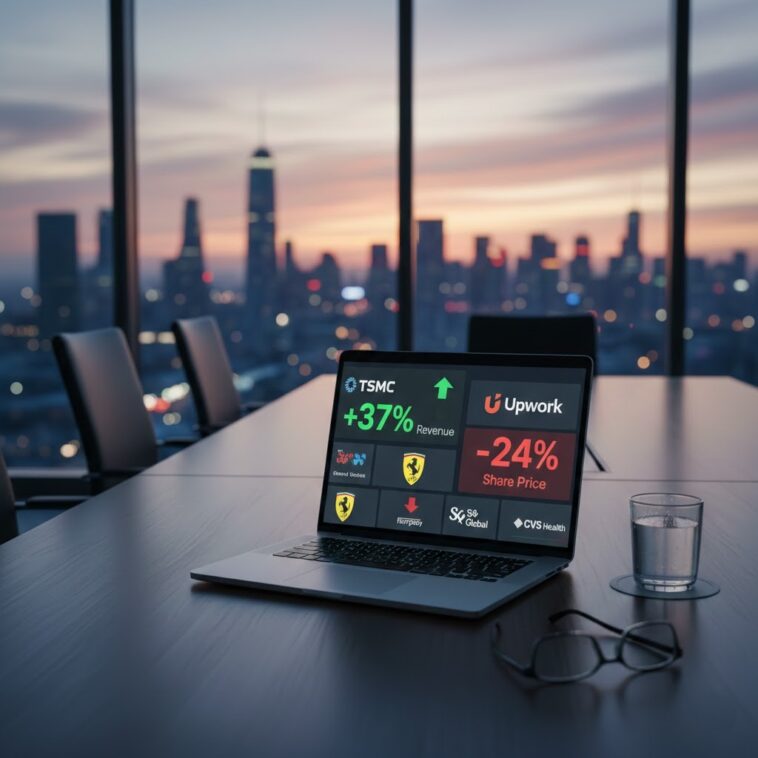
The latest round of corporate report cards has arrived, and the results are anything but uniform as earnings season winners and losers emerge in a volatile market. From the dizzying heights of the semiconductor boom to the sobering reality check hitting the freelance economy, investors are parsing through a mountain of data to determine which companies are actually built for the long haul in 2026.
The AI Tailwinds and Luxury Sprints
Leading the charge is Taiwan Semiconductor Manufacturing Co. (TSMC). The foundry giant essentially set the tape on fire Tuesday, reporting a staggering January revenue of 401.3 billion New Taiwan dollars—a 37% year-over-year jump. When the world’s most important chipmaker hits its highest monthly revenue ever, the market listens.
“TSMC isn’t just riding a wave; they are the wave,” says Elena Rossi, a senior equity analyst at Milano Global. “When you see growth of this magnitude, it signals that the appetite for high-end silicon isn’t just holding steady—it’s accelerating.”
It wasn’t just tech making moves. Ferrari proved that the ultra-wealthy haven’t closed their wallets, with U.S. shares jumping over 8% following a clean sweep of earnings and revenue beats. In the luxury world, momentum is everything, and Maranello is currently firing on all cylinders.
A Guidance Reality Check
However, the mood turned sour for S&P Global, which saw its stock crater 16%. The culprit? A classic case of “mind the gap” between corporate projections and Wall Street’s imagination. The firm’s 2026 earnings guidance fell significantly short of analyst estimates, proving that even the companies that grade the markets aren’t immune to their pressures.
Similarly, CVS Health found itself in the crosshairs. Despite beating on the top and bottom lines for the fourth quarter, the pharmacy giant slashed its cash flow projections. “CVS is a bit of a head-scratcher right now,” notes Marcus Thorne, a hedge fund manager. “The revenue is there, but when you tell the street you’re going to have $1 billion less in cash than previously thought, people start looking for the exit.”
The Digital Divide: Upwork and Chegg Tumble
Perhaps the most dramatic shift occurred in the “future of work” sector. Upwork shares didn’t just fall; they plummeted 24% after the platform revealed its active client base is shrinking. It’s a sobering reminder that the pandemic-era freelancer boom is facing a harsh correction. Chegg followed a similar downward trajectory, with revenue nearly halved compared to last year—a victim, perhaps, of the very AI tools that are currently boosting TSMC’s bottom line.
Mixed Bags and Late Surprises
Coca-Cola: The beverage king dropped 3% as revenue missed the mark. While they are still squeezing out profits, the “modest growth” forecast left a flat taste in investors’ mouths.
Dupont De Nemours: A quiet winner, gaining 2% on an earnings beat and solid forward-looking guidance.
Credo Technology: In a surprise pre-earnings announcement, Credo shares spiked 15% after the company massively hiked its revenue targets.
The Road Ahead
As the dust settles on this batch of reports, the narrative for the rest of 2026 is becoming clear: growth is no longer guaranteed by sector alone. We are entering a “show me the money” phase where guidance and cash flow are king. For the earnings season winners and losers, the difference between a rally and a rout often comes down to a single line in a guidance statement.