Editor
Hot Inflation Data Crushes Six-Week Rally as Oil Spikes Past $101
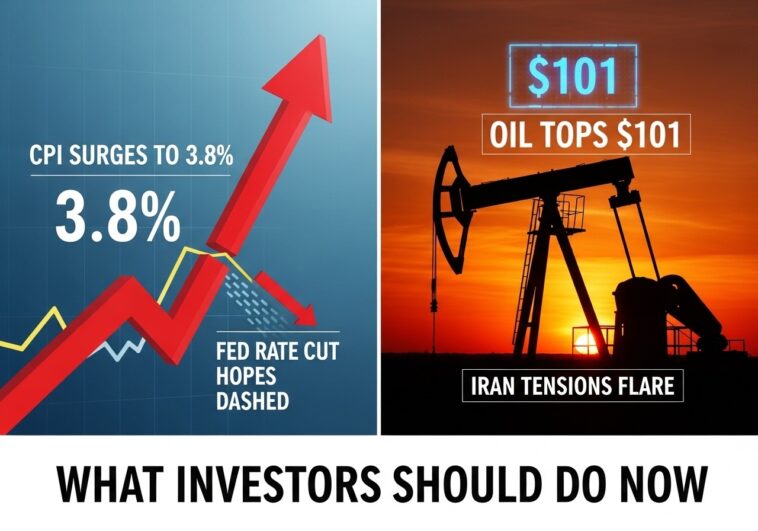
Consumer prices climbed a scorching 0.6% in April, pushing the annual inflation rate to 3.8%—the hottest reading since May 2023 and a brutal reminder that the Federal Reserve’s battle with rising costs is far from over. Markets stumbled. The S&P 500 shed 0.7%. The Nasdaq? Down 1.2%. TheStreet
The inflation data arrived like a gut punch to investors who’d grown accustomed to six consecutive weeks of gains, with both the S&P 500 and Nasdaq setting fresh all-time highs just Monday. Tuesday’s reality check was swift and merciless.
The culprit? A toxic cocktail of surging energy and food prices, driven largely by the ongoing U.S.-Iran conflict that’s kept the Strait of Hormuz effectively shuttered since late February. West Texas Intermediate crude jumped 3% to breach $101 per barrel, while Brent crude climbed above $108. Gas stations now display an uncomfortable $4.50 average nationwide. TheStreet
“The Fed’s move? Predictable, yet jarring,” says Marcus Thorne, Head of Macro Strategy at Apex Capital Partners in New York. “We’re watching core CPI—the metric that strips out volatile food and energy—rise 0.4% monthly and 2.8% annually. That’s not transitory. That’s structural.” TheStreet
When Grocery Bills Become Inflation Barometers
Walk into any H-E-B in Austin or Kroger in Columbus, and you’ll see the damage firsthand. Tomato prices have soared 15% month-over-month for the second consecutive month, courtesy of drought conditions plaguing North America. Beef jumped 2.7% in April alone. Even your electric bill isn’t safe—electricity prices surged 2.1% from March. CNBC + 2
“President Trump might feel greater urgency to sign that reported executive order removing tariffs on beef imports,” notes Stephen Brown, Chief North America Economist at Capital Economics. The administration is caught between geopolitical posturing abroad and consumer pain at home.
Chris Zaccarelli, Chief Investment Officer at Northlight Asset Management, didn’t mince words: “Given that inflation is heading in the wrong direction and the labor market is holding up, it’s very unlikely that the Fed will be able to lower interest rates any time soon, and it’s possible we may start pricing in rate hikes for next year.” TheStreet
Rate hikes. Not cuts. Let that sink in.
The Counter-Play: Why One Analyst Sees Opportunity
Not everyone’s running for the exits. Vivian Chen, Senior Portfolio Manager at Redstone Wealth Advisors, sees Tuesday’s selloff as precisely the wrong reaction. “Markets are conflating two separate stories,” she argues. “Yes, headline inflation is elevated because of energy—a war-driven supply shock. But underlying service inflation is cooling. The labor market showed wage growth of just 0.2% in both March and April. That’s Fed-friendly data buried in today’s noise.”
Chen’s contrarian take: selective buying in sectors that benefit from higher oil prices. Energy infrastructure. Domestic producers with hedged positions. “Everyone’s panicking about 3.8% inflation,” she says. “I’m buying what performed when oil last traded above $100.”
What Retail Investors Should Actually Do
First, abandon the fantasy of imminent rate cuts. The Consumer Price Index reading keeps inflation well above the Federal Reserve’s 2% target. The terminal rate for 2026 just moved higher in bond traders’ minds. TheStreet
Second, reassess your allocation. The concentration risk in mega-cap tech—where three companies (Amazon, Alphabet, Meta) explain roughly 70% of the year’s increased earnings expectations—looks increasingly fragile when real rates stay elevated. Only 52% of S&P 500 stocks traded above their 50-day moving averages as of Friday, even as the index itself notched records. That’s divergence. That’s a warning sign. Charles SchwabCharles Schwab
Third, consider inflation hedges. Treasury Inflation-Protected Securities suddenly look less boring. Commodities beyond oil—copper’s up 13% year-to-date—offer exposure without betting on continued Middle East chaos. Even Warren Buffett’s favorite dividend ETFs pulled in $22 billion in Q1 as investors sought stability.
The market’s been riding an AI-fueled updraft since January, shrugging off geopolitical chaos and lofty valuations. Tuesday’s inflation data reminded everyone that physics still applies. What goes up faces gravity eventually. Especially when the Fed’s holding the strings.
Oil above $100. Inflation above 3.5%. Rate cuts off the table. The playbook just got rewritten. Again.