Editor
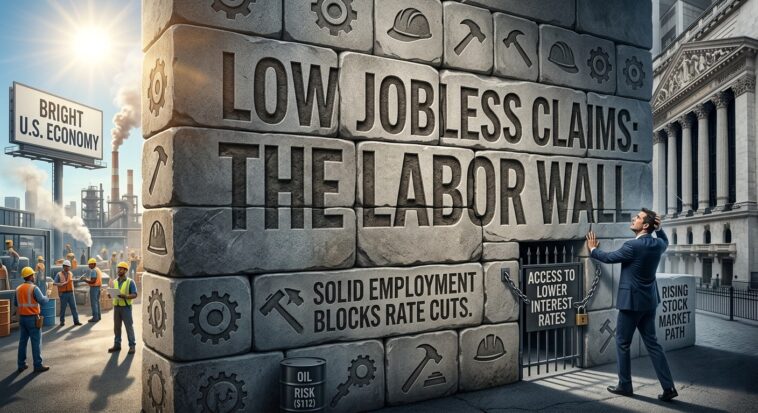
The Labor Wall: Why ‘Good’ Jobs Data is Pure Poison for Stocks
NEW YORK — Weekly initial jobless claims just gave the Federal Reserve another reason to keep the screws tightened.
The numbers hit the tape at 8:30 AM on Thursday, and the reaction was immediate. A collective groan from the floor of the New York Stock Exchange. The Department of Labor reported that filings for unemployment benefits fell to 208,000 for the week ending March 28. That is a four-month low. In a normal world, people having jobs is a victory. In the post-pandemic, geopolitically mangled world of 2026, it’s a hurdle.
The U.S. economy refuses to cool down. It is stubborn. Frustratingly resilient. With the April 6 Iran deadline just four days away and oil hovering at $112, the Fed needed to see the labor market crack. They didn’t get it. Instead, they got proof that the American consumer still has the paycheck to keep spending, which means inflation isn’t going anywhere.
The S&P 500 futures, which were already struggling to maintain a Tuesday “hope rally,” turned tail and dived. Ten-year Treasury yields, the heartbeat of global borrowing costs, spiked again. They are now knocking on the door of 4.55%.
Tight Labor Markets and Initial Jobless Claims
The “why” behind the market’s sour mood is simple math. Jerome Powell has been clear: he needs “slack” in the labor market before he even thinks about a rate cut. These initial jobless claims prove there is no slack. There is only tension.
“The Fed is staring at a two-front war,” said Marcus Thorne, Head of Macro Strategy at a New York boutique firm. “On one side, you have an energy shock that is driving up the cost of everything. On the other, you have a labor market so tight that wages have no choice but to climb. It’s a classic wage-price spiral in the making. Today’s claims data effectively kills the idea of a June pivot. The Fed is stuck in a hawkish box, and the market is finally smelling the smoke.”
Thorne isn’t being dramatic. The yield curve remains inverted—a historical harbinger of recession—but the labor data suggests the “recession” is nowhere to be found. This disconnect is dangerous. It creates a vacuum where valuations for high-growth tech stocks simply cannot survive 5% interest rates.
The Dissent: A ‘Laggard’ Mirage?
Not everyone is convinced the labor market is as bulletproof as it looks. In the research labs of the mid-tier banks, some see a different picture. They argue the government is measuring the past, not the future.
“We are seeing a massive divergence between headline claims and actual hiring intent,” argues Julianne Kross, Chief Investment Officer at a Chicago-based tactical fund. “Yes, people aren’t being fired yet. But they aren’t being hired at the same clips either. Look at the ‘quits rate.’ It’s plummeting. People are staying put because they are scared. This isn’t a strong labor market; it’s a frozen one. The Fed risks over-tightening into a ghost economy.”
Kross’s view is the minority. Most traders are looking at the 208k print and selling their losers.
The Investment Tip: The ‘Yield Cushion’ Strategy
For the retail investor, the message from the labor market is loud: Cash is no longer trash. If you are waiting for a stock market miracle to save your portfolio before the April 6 deadline, you are gambling.
The Strategy: Embrace the “Risk-Free” Rate. With the 2-year Treasury yield screaming toward 4.8%, you are being paid to wait.
The Play: Short-term T-bills are your best friend. A six-month Treasury bill offers a yield that tech stocks haven’t seen in a decade. It’s a guaranteed return while the geopolitical dust settles.
The Equity Hedge: If you must stay in the S&P, pivot to “Defensive Value.” Look for utilities and consumer staples that have been beaten down. These companies have the pricing power to survive the inflation that the tight labor market is feeding.
The Final Countdown
The clock is ticking toward Monday’s deadline. Between the initial jobless claims today and the “NFP” (Non-Farm Payrolls) report due tomorrow morning, the Fed will have all the ammunition it needs to stay aggressive.
The market? Spooked. The bond yields? Surging. Wall Street is no longer asking when rates will fall. They are asking how much higher they can go before something finally breaks.
The smartest person in the room is the one holding cash. Right now, the room is getting very loud.