Editor
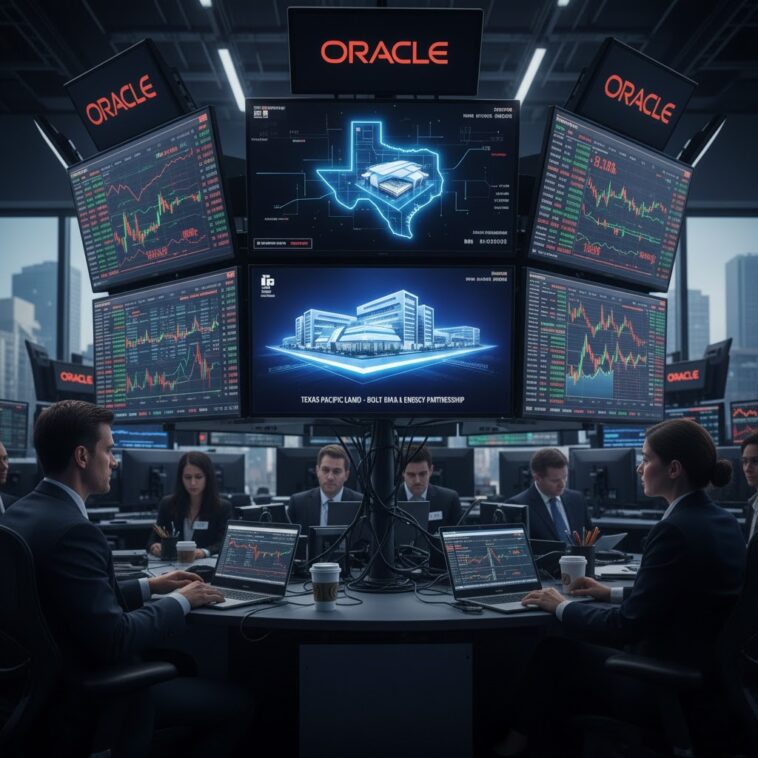
In a session defined by the insatiable appetite for artificial intelligence infrastructure, market movers on Tuesday were largely dictated by who is building the “pipes” for the next tech revolution. From West Texas land deals to pharmaceutical breakthroughs in Paris, investors spent the day recalibrating their portfolios as a wave of corporate maneuvering swept through the indices.
The Data Center Land Grab
The biggest story of the day wasn’t in Silicon Valley, but in the Permian Basin. Shares of Texas Pacific Land surged 8% after the firm announced a landmark deal with Bolt Data & Energy. The plan? To transform vast swaths of Texas scrubland into massive data center campuses.
“We are seeing a fundamental shift in how physical real estate is valued,” says Marcus Thorne, a senior analyst at Capital Peak Insights. “It’s no longer just about oil and gas rights; it’s about the proximity to power and the ability to host the massive compute loads required for AI. Texas Pacific is sitting on a goldmine of utility-scale potential.”
However, the infrastructure trade wasn’t all green screens. Oracle shares tumbled 6% following reports from the Financial Times that Blue Owl Capital would not be backing a proposed $10 billion data center project in Michigan. The news served as a sobering reminder that while the demand for AI is infinite, the capital required to build it remains subject to the whims of high-finance backers.
Media Mergers and EdTech Consolidations
The landscape of digital content and entertainment also saw significant shifts. In a move that surprised some corners of Wall Street, Coursera announced it would acquire Udemy in a deal valuing the combined entity at $2.5 billion. Udemy’s stock skyrocketed 21% on the news, while Coursera added 3%.
Meanwhile, a high-stakes drama is unfolding in the media sector. The board of Warner Bros. Discovery took a definitive stand today, unanimously recommending that shareholders reject a takeover bid from Paramount Skydance in favor of a “superior” proposal from Netflix. The move highlights the intensifying consolidation pressure as traditional studios struggle to compete with the streaming giant’s scale.
Mixed Results in Consumer Staples and Housing
It wasn’t just tech making headlines. The “old economy” sectors provided their own share of drama:
Lennar shares dropped 5% after the homebuilder issued a first-quarter outlook that failed to meet the lofty expectations of analysts. Despite beating revenue estimates in the fourth quarter, investors were spooked by thinner-than-expected gross margins—a sign that high interest rates may finally be biting into the housing market’s resilience.
General Mills proved to be a rare bright spot for consumer staples, rising 3% after beating both top and bottom-line estimates. “The American consumer is still buying Cheerios, even if they’re thinking twice about a new house,” noted Sarah Jenkins, a retail strategist at WestEnd Wealth.
Brown-Forman fell nearly 5% after Citigroup issued a stern “sell” rating. Analysts argued that the recent rally in the Jack Daniel’s parent company was “overdone” given the broader headwinds facing the spirits category.
A Breakthrough for Biotech
Overseas, French pharmaceutical firm Dbv Technologies saw its U.S.-listed shares leap over 20%. The rally came on the heels of positive Phase 3 trial data for its peanut allergy treatment targeting children aged 4 to 7. For parents and investors alike, the results represent a significant milestone in a long-awaited medical solution.
Looking Ahead
As the dust settles on Tuesday’s trading, the focus remains squarely on the intersection of energy and AI. With companies like 8Hut surging 11% on new partnerships with Anthropic, and Recursion Pharmaceuticals jumping 16% on its AI-driven pipeline, the trend is clear.
“The market is ruthlessly separating the ‘haves’ from the ‘have-nots’ in the AI race,” Thorne added. “If you aren’t building the infrastructure or using it to solve a massive problem, you’re being left behind.”