Editor
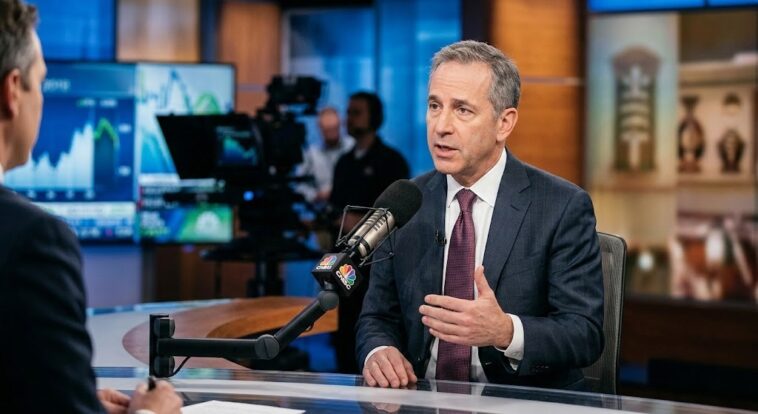
Federal Reserve interest rate cuts are no longer a matter of “if” but “how deep” for Governor Stephen Miran, who emerged Friday to argue that the central bank is effectively fighting the wrong war.
Following a bruising February jobs report that saw nonfarm payrolls plummet by 92,000, Miran suggested the Fed’s current stance isn’t just cautious—it’s potentially damaging. Speaking with CNBC’s Money Movers, the Trump appointee made it clear that the cooling labor market should now take precedence over the lingering ghosts of inflation.
“I think we don’t have an inflation problem,” Miran said, in a tone that sat somewhere between an observation and a challenge to his colleagues. “I think that the labor market can use more accommodation.”
Chasing the Elusive “Neutral”
The debate inside the Eccles Building currently centers on where the “neutral” rate sits—that Goldilocks zone where monetary policy neither stimulates nor throttles the economy.
While the broader FOMC consensus pegged neutral at roughly 3.1% back in December, Miran believes we are still a full percentage point away from where we need to be. With the current benchmark sitting between 3.5% and 3.75%, the math of Federal Reserve interest rate cuts remains a point of high-stakes friction.
“Miran is playing the role of the institutional agitator,” says Elena Vance, Chief Economist at Beacon Policy Advisors. “He’s essentially arguing that the Fed is driving with the parking brake on while the engine is starting to smoke. By calling for a move to neutral now, he’s signaling that the ‘soft landing’ everyone hoped for might be turning into a hard bounce.”
Bad Data vs. Bad Economy
One of Miran’s more nuanced—and controversial—arguments is that current inflation data is being skewed by “phantom” pressures. He pointed to portfolio management fees, which have ticked up simply because the stock market has performed well. Since these fees are often a percentage of assets under management, the “inflation” reflected in the data is more a mirror of wealth creation than a rise in the cost of living.
Even the geopolitical volatility in the Middle East didn’t seem to rattle him. Despite the Iran conflict pushing prices higher at the pump, Miran dismissed the surge as a “one-off shock.”
“Typically, the Federal Reserve doesn’t respond to higher oil prices like that,” Miran noted, pivoting back to core inflation as the more reliable North Star for medium-term policy.
A Serial Dissenter in a Changing Guard
Miran has not been shy about his disagreement with the status quo. Since his nomination by President Trump, he has dissented at every FOMC meeting he’s attended. While the committee opted for measured quarter-point trims in late 2025, Miran was the lone voice calling for “jumbo” half-point cuts.
His tenure, however, is in a state of flux. Having filled the unexpired term of Adriana Kugler, Miran is currently serving in a “holdover” capacity while the administration prepares for a broader reshuffling of the Fed’s leadership—including the looming expiration of Chair Jerome Powell’s term in May.
What Lies Ahead
As the Fed prepares to meet in two weeks, the question isn’t just about the data, but about the soul of the committee. Will Miran’s colleagues finally blink in the face of the jobs deficit, or will he remain a lone voice in the wilderness?
“I hope not,” Miran said when asked if another dissent was on the horizon. “But that would be up to my colleagues. I hope that we vote to cut.”
For now, the markets are left to wonder if Miran is a prophet of a coming recession or simply an outlier in a central bank that prefers to move at a glacial pace.