Editor
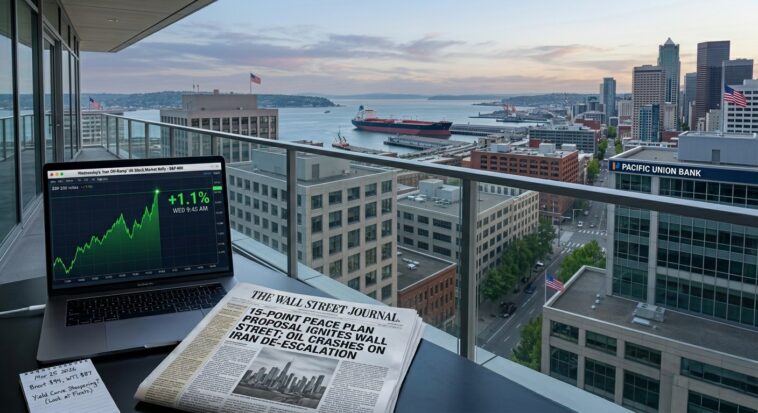
A sudden US stock market rally erupted Wednesday morning, fueled by a diplomatic “Hail Mary” that has sent crude oil into a freefall. The S&P 500 jumped 1.1% in the first hour of trading. The Dow followed suit, climbing nearly 550 points. This isn’t just a technical bounce; it’s a sigh of relief. The catalyst is a reported 15-point peace proposal delivered from Washington to Tehran via intermediaries in Islamabad.
The move caught the pits off guard. For weeks, the narrative was one of escalation, $120 oil, and a Federal Reserve backed into a corner. Now? The script is flipping. Brent crude plummeted over 5% to trade back near $94. WTI followed, sliding to $87. In the high-stakes poker game of global energy, someone just blinked.
Navigating the US Stock Market Rally in a Sea of Crude
The mechanics here are straightforward. High energy prices act as a lead weight on consumer spending and a blowtorch to inflation data. When oil prices retreat this sharply, the “inflation tax” on the American household eases. It also gives the Federal Reserve, which last week signaled a “wait-and-see” approach at 3.5%, a possible exit ramp from further hikes.
“The market was priced for a long, grinding war of attrition in the Strait of Hormuz,” says Marcus Thorne, Head of Macro Strategy at a New York boutique firm. “This 15-point plan, even if it’s just a draft, provides a valuation floor. Investors are pivoting from ‘survival mode’ to ‘growth mode’ in a matter of hours. You see it in the yields. The 10-year Treasury is finally cooling off.”
Indeed, the 10-year yield dipped to 4.33% Wednesday, easing the pressure on tech giants like Apple and Microsoft. When the “risk-free” rate drops, the discounted future earnings of Silicon Valley suddenly look more enticing. But the “grit” of this market lies in whether this optimism is misplaced.
The Skeptic’s Corner: A Bull Trap in Disguise?
Not everyone is ready to pop the champagne. While the headlines scream peace, the reality on the ground remains muddied. Iranian state media has already issued a stern dismissal of “direct talks,” calling the reports “Western psychological warfare.”
“We’ve seen this movie before,” warns Jackson Pierce, Head of Energy Trading at a Houston-based hedge fund. “Washington offers a carrot while the 82nd Airborne is still loading the sticks. If Tehran rejects this 15-point plan by Friday, oil won’t just move back to $100—it’ll blast through it. This rally is built on a hope that hasn’t been signed in ink yet.”
Pierce’s counter-narrative is the “ghost in the machine.” If the diplomatic off-ramp proves to be a dead end, the reversal will be violent. The gap between market “hope” and geopolitical “fact” has rarely been this wide.
The Investment Tip: Watch the Yield Curve Steepeners
For the retail investor, the current US stock market rally offers a specific tactical opportunity. In times of extreme geopolitical stress, the yield curve often “flattens” as investors rush to the safety of long-term bonds.
The Tip: If you believe the peace proposal has legs, look for the curve to “steepen.” This usually benefits regional banks and financial institutions that borrow short and lend long. As the threat of a recessionary energy shock recedes, the 2-year and 10-year yields will likely diverge. Moving a portion of a “growth” portfolio into financials during a de-escalation phase is a classic veteran move. It’s a hedge against the Fed staying “higher for longer” even as the war risk fades.
The Bottom Line
Wall Street is betting on the diplomats. For now, the “Iran Off-Ramp” is the only story that matters. If the 15-point plan leads to a meeting by Thursday, as mediators from Turkey and Pakistan suggest, we could be looking at the start of a massive end-of-quarter melt-up.
But don’t get comfortable. The market is trading on headlines, not earnings. Keep your eyes on the Friday deadline. The peace might be tentative, but the volatility is here to stay.