Editor
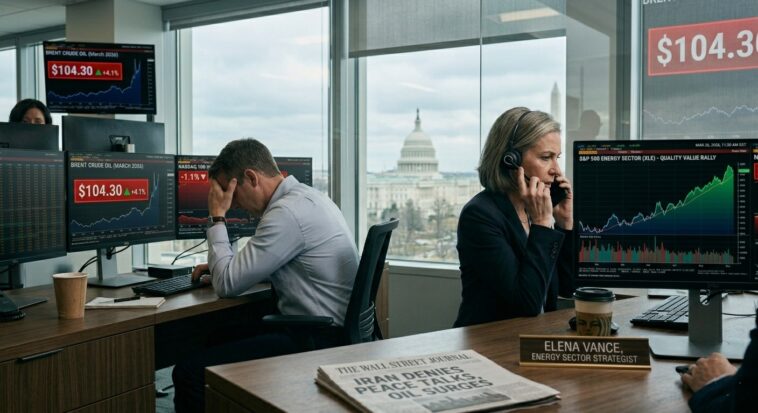
The mid-week US stock market rally hit a jagged edge Thursday morning as the “peace” narrative began to unravel faster than a cheap suit. Wall Street wanted a miracle. It got a memo. By the opening bell, the optimism that pushed the Dow up 550 points on Wednesday had evaporated. Traders are now staring down a $4 jump in crude prices and a diplomatic “15-point plan” that looks increasingly like a ghost.
The tape doesn’t lie. Brent crude surged back to $104.30 a barrel in early trading, clawing back every cent of yesterday’s relief drop. The reason? Tehran. Iranian state media issued a flat denial of any direct negotiations with Washington, dismissing reports of a ceasefire as “Western psychological warfare.” For a market that was betting the house on a diplomatic off-ramp, the reversal was jarring.
Dissecting the Stalled US Stock Market Rally
The morning’s data dump didn’t help. Initial jobless claims for the week ending March 21 landed at 210,000, exactly on the consensus estimate. It was an uptick from the previous week’s 205,000. On the surface, it’s a non-event. But look closer. Continuing claims fell to 1.819 million—the lowest level for insured unemployment in nearly two years.
The labor market is refusing to break. While that sounds like a win for Main Street, it’s a headache for the Federal Reserve. A resilient workforce, combined with a $100-per-barrel oil floor, is the ultimate recipe for “Higher for Longer” interest rates. The market is now pricing in exactly zero rate cuts for the remainder of 2026.
“The Wednesday move was a classic ‘hope trade’ built on thin ice,” says Marcus Thorne, Head of Macro Strategy at a New York boutique firm. “You can’t have a sustained US stock market rally when the energy input for the entire economy is up 40% on the month. The Fed is boxed in. If they cut rates to save the regional banks, they let inflation run wild. If they hold, they risk a hard landing. Today, the bond market is betting they hold.”
The Dissent: A Bullish Energy Play?
Not everyone is mourning the morning’s red screens. A small contingent of energy bulls sees this volatility as a signal to double down.
“We are entering a structural energy deficit that no 15-point memo can fix,” argues Dr. Elena Vance, a senior analyst at a Dallas-based energy fund. “The market is punishing tech because of yields, but energy stocks are generating record free cash flow at $90 oil. This isn’t a market crash; it’s a massive rotation. If you aren’t long on domestic producers right now, you aren’t playing the 2026 tape correctly.”
Vance’s view is the grit in the gears of the current bearish sentiment. While the Nasdaq 100 slid 1.1% in the first hour of trade, the energy sector was the lone green island in a sea of red.
The Investment Tip: The Quality Anchor
For the retail investor, the “trick” in this environment is distinguishing between price and value. When geopolitics drive the bus, the broad indices become unreliable.
The Play: Look for “Quality Value.” In a world of 4.4% Treasury yields and volatile oil, speculative growth is a trap.
Focus on Interest Coverage: Prioritize companies with low debt-to-equity ratios. If the Fed stays at 3.5% through 2027, companies that need to refinance debt will get slaughtered.
The Energy Hedge: Don’t chase the spike, but keep a 10% allocation in energy infrastructure. These firms act as a natural hedge against the “inflation tax” at the pump.
The Road to Friday
The clock is ticking on the five-day strike pause. By tomorrow’s close, we will know if the diplomats have a seat at the table or if the drones are back in the air. Israel’s reported strike on an Iranian naval commander overnight suggests the latter.
The US stock market rally of Wednesday was a breath of fresh air. Thursday? It’s a reminder that in this economy, oil is the only boss that matters. Watch the $100 level on Brent. If it holds there through the weekend, the “soft landing” narrative might finally be headed for the shredder.