Editor
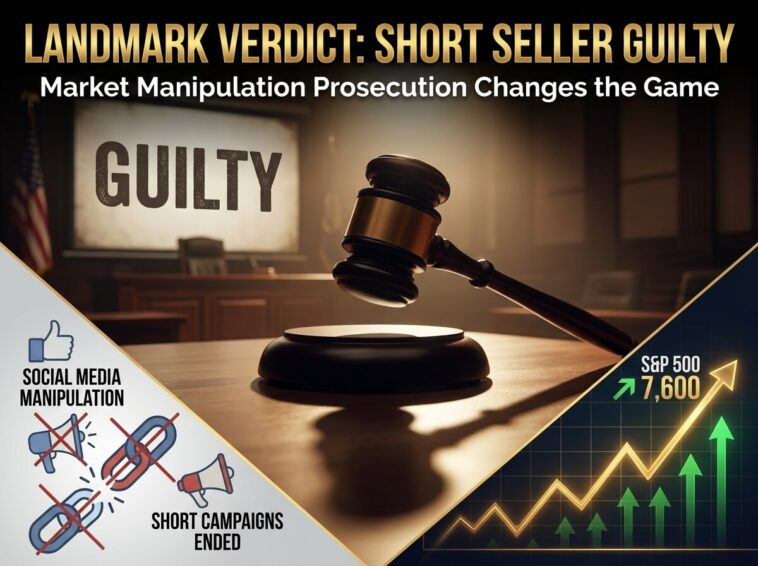
Short Seller Andrew Left Found Guilty in Landmark Stock Manipulation Case That Could Reshape Markets
Famed short seller Andrew Left was found guilty of using misleading social media posts to manipulate stocks, facing the possibility of decades in prison following a three-week trial in Los Angeles. This. Changes. Everything. CNBC
For two decades, Andrew Left built a massive online following attacking major U.S. companies with blunt commentary, publishing research reports after positioning himself short, and profiting from the inevitable collapse when his allegations terrified retail investors. It was theater. It was market manipulation disguised as due diligence. And it finally caught up with him.
Left, who built a large online following with blunt commentary on major U.S. companies as well as smaller stocks popular with retail traders, was convicted Monday following a three-week trial in Los Angeles. The indictment stemmed from a wide-ranging U.S. probe into practices within the lightly regulated short-selling industry. CNBCCNBC
The market barely noticed. The S&P 500 is riding a nine-day and nine-week winning streak, with yesterday’s gains modest at only ~0.1% but closing above 7,600 for the first time. Stocks don’t care about regulation. They care about earnings and geopolitics. But they should care about this. NYSE
“This verdict isn’t about Andrew Left,” says Marcus Richardson, Chief Market Strategist at Granite Peak Capital in Boston. “It’s about the death of the short-seller industry as we know it. You can’t build a business model on manipulating retail traders via social media anymore. That door just slammed shut. The regulatory hammer fell, and every short seller in America just realized their business model became federal crime territory.”
Why This Verdict Matters More Than Another Market Record
Firms typically build bets that a company’s shares will fall, then publish research reports outlining their positions to the broader market. Sounds legitimate. Isn’t. The mechanics are simple: short a stock at $50, publish research claiming fraud, watch panicked retail investors dump shares at $30, cover your short at massive profit, repeat. CNBC
That business model just became felony-level criminal enterprise.
Left didn’t just write research reports and let the market decide. He orchestrated social media campaigns, built an army of online followers, weaponized commentary into coordinated market manipulation. The difference between legitimate short research and what Left did? Intention. Coordination. Deliberate market moving.
The Roundhill Magnificent Seven ETF (MAGS) slipped 0.45% to $68.89 in premarket trading, tracking an equal-weight basket of mega-cap technology stocks. Markets are consolidating after the 9-week winning streak. But beneath that consolidation is a tectonic shift in regulatory enforcement. Yahoo Finance
The SEC hasn’t had teeth like this in years. Now they do. And short sellers are terrified.
The Market Consolidation Nobody Wants to Admit Is Here
Small and midcap indices outperformed ending up closer to 1% after underperforming in the prior session. That’s rotation. Small caps catching a bid while mega-cap tech takes a breather. The Nasdaq and Dow are declining from recent records while the broader market stabilizes. NYSEYahoo Finance
This is what healthy consolidation looks like. Not panic. Not a crash. Just a pause. The tech rally out-muscled troubling war news early this week, and the epic clash between rising oil prices and bullish chip sentiment could be due for another chapter. CNBC
But the Andrew Left guilty verdict reframes the entire conversation about market integrity and short-selling practice. For years, the short-selling industry operated in a gray zone—aggressive? Yes. Manipulative? Debatable. Criminal? That’s what the jury just determined.
The Contrarian Case: Why One Analyst Says This Doesn’t Matter
Not everyone’s convinced the conviction reshapes markets. Patricia Chen, Senior Regulatory Strategist at Summit Peak Advisors in New York, sees the Left verdict as isolated case law that won’t fundamentally change short-selling. “One conviction doesn’t destroy an industry,” Chen argues. “Short-selling plays a vital role in price discovery. The market needs skeptics. What it doesn’t need is coordinated manipulation. But distinguishing between ‘aggressive research’ and ‘coordinated market manipulation’ is extremely difficult legally.”
Chen’s right. But she’s missing the point. The jury didn’t debate semantics. They convicted. And that conviction creates precedent. Future short sellers will think twice before orchestrating social media campaigns around negative research. The legal risk just became quantifiable.
What Retail Investors Must Do Right Now
First, understand that the guilty verdict against Andrew Left in the landmark case could chill a trading strategy long criticized by corporate executives. Short-sellers who operated in gray zones just lost their legal cover. CNBC
Second, be extremely cautious about following “short seller research” on social media. The conviction stemmed from a wide-ranging U.S. probe into practices within the lightly regulated short-selling industry. That probe is likely far from over. More convictions are probably coming. CNBC
Third, recognize that the S&P 500 is consolidating at 7,600 for the first time while the Left verdict sends a message: market manipulation carries severe consequences. That’s actually bullish long-term for legitimate investors, because it removes a class of predatory traders from the ecosystem. NYSE
Fourth, consider the Left verdict as a sign of regulatory shift. If the SEC is aggressive enough to pursue and win a high-profile case like this, they’re likely aggressive on other market abuse vectors too. That’s ultimately good for stability and retail investor protection.
The S&P 500 just hit 7,600. Andrew Left is facing decades in prison. The short-selling industry just got a memo: your business model is now a federal crime if you coordinate social media campaigns around stock picks.
Markets don’t crash on regulatory news. They consolidate. They grind. They move higher over time as the bad actors get removed.
This verdict is that removal process happening in real time.