Editor
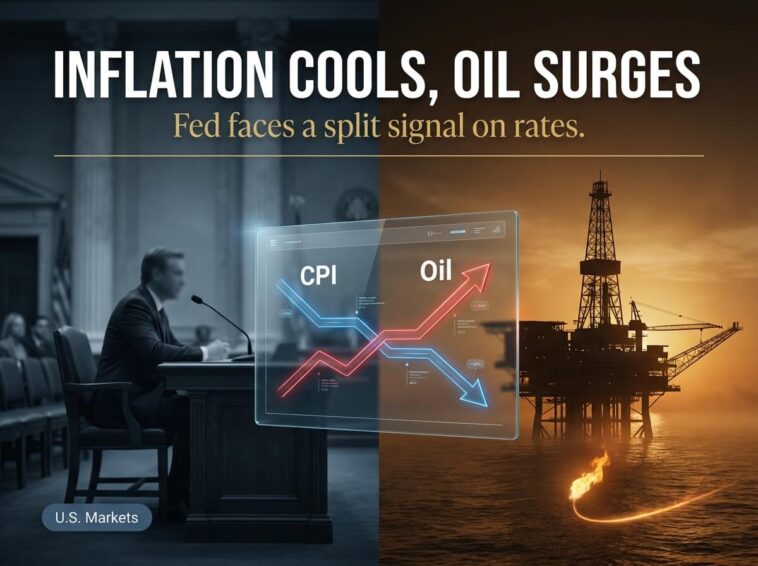
The June CPI Report Just Handed the Fed a Gift. Oil Might Take It Back.
The June CPI report landed Tuesday morning with a number nobody quite expected. Inflation cooled to 3.5%. Consumer prices actually fell 0.4% from May, the first monthly decline in six years.
Good news. Genuinely good news. For about ninety minutes.
Then Brent crude surged to $85.77 a barrel. Highest level in over a month. The reason: the fragile ceasefire between the U.S. and Iran collapsed entirely. American forces reimposed a naval blockade. More airstrikes followed. Tehran hit oil tankers in the Strait of Hormuz. Same morning as the country’s best inflation print in years.
Two headlines. Pulling in opposite directions. Wall Street had to hold both at once.
Why the June CPI Report Won’t Settle the Rate Debate
Here’s the uncomfortable math. June’s CPI decline came almost entirely from falling gas prices, tied to a ceasefire that existed for exactly one news cycle before collapsing. Energy carried more than the entire monthly drop in prices. Once that energy tailwind reverses, and it’s reversing right now, the disinflation story looks a lot shakier.
“This is the most misleading good number I’ve seen all year,” said Marcus Thorne, Head of Macro Strategy at a New York boutique advisory firm. “Headline CPI fell because gas got cheaper for about three weeks. Oil’s already back above eighty-five dollars. By July’s report, this entire narrative could flip. The Fed knows that. Markets should too.”
Futures are now pricing something close to a coin flip on a Fed rate hike within two weeks. Not a cut. A hike. That’s a stunning shift from where sentiment sat just a month ago, and it’s happening because the yield curve is reading the oil shock as the more durable signal, cooling CPI notwithstanding. The 10-year Treasury yield pushed higher Tuesday, right alongside crude.
Fed Chair Kevin Warsh, testifying before Congress in his first appearance since taking the job, didn’t offer much comfort either way. “The Fed will deliver price stability,” he told lawmakers. Firm words. No forward guidance attached. Classic Warsh.
The Skeptic Who Says Don’t Chase the Oil Scare
Not everyone thinks this energy spike changes the underlying trend, though.
“People are treating one geopolitical flare-up like it rewrites the inflation story. It probably doesn’t,” said Elena Voss, senior equity strategist at a Chicago research shop. “Core inflation barely moved this report. That’s the number that actually feeds into what the Fed watches closely. Energy shocks tied to a shipping chokepoint tend to be sharp and temporary. I wouldn’t rebuild a portfolio around eighty-five-dollar oil sticking around through August.”
Voss isn’t wrong that core held steady. But “core held steady” and “markets are calm” are two different things, and Tuesday’s price action wasn’t calm. JPMorgan, despite reporting the highest quarterly profit in its history, actually slipped in early trading before recovering, on concerns that one-time gains flattered the headline number and management offered no upgraded guidance. Wells Fargo and Bank of America both beat estimates too. Financial markets shrugged off blowout bank earnings almost entirely, distracted by the same oil and rate questions dogging everyone else.
What This Means for Your Portfolio
The lesson from Tuesday isn’t which number to believe. It’s how to position when two credible signals disagree.
A cooling headline CPI print is good news, until you look at what drove it. When a disinflation story rests heavily on one volatile input, energy prices tied to an active war zone, that’s a fragile foundation, not a settled trend. The yield curve, which jumped Tuesday despite the soft CPI, is telling you the market isn’t fully buying the calm either.
For a retail investor, the practical move is to stay diversified across both outcomes rather than betting the house on either story. If oil keeps climbing and the Fed leans toward a hike, rate-sensitive growth stocks and long-duration bonds take the hit first. If the ceasefire gets patched together again and energy prices fade, this whole scare could unwind by August, the way similar spikes have before.
Watch core inflation next month, not the headline. Watch oil daily. And don’t let one good CPI print, built on a ceasefire that lasted three weeks, convince you the inflation fight is over. Tuesday proved it very much isn’t.