Editor
Oil Prices Climb, the Dow Sheds 600 Points, and September Keeps Living Up to Its Name.
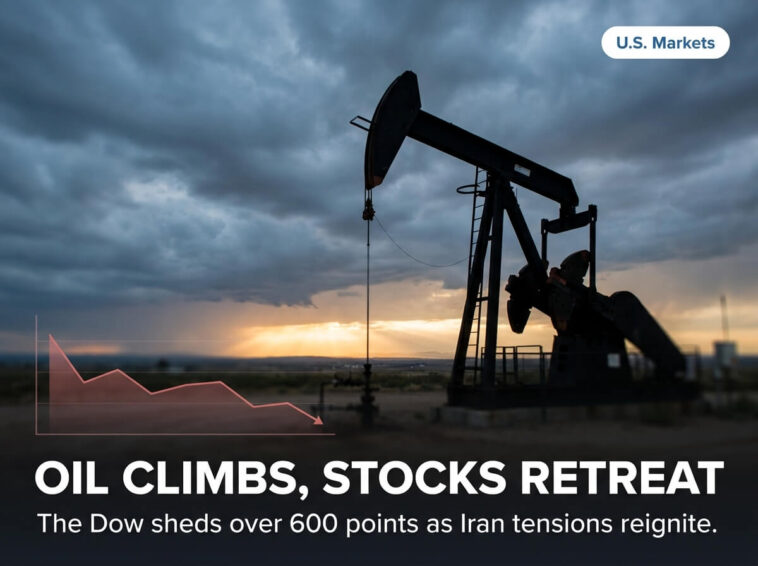
Oil prices climb sharply Tuesday morning as Iran warns it “will take action against any threat,” and the reopening bell after Labor Day didn’t waste any time delivering bad news. The Dow fell 613.60 points, down 1.15%, to 52,800.65. The S&P 500 dropped 0.47% to 7,681.96. The Nasdaq slid to 26,379.01.
That’s a rough return from a long weekend, and it came with company. An escalating trade dispute with Canada added its own weight to an already crowded list of concerns Tuesday, layering a fresh trade-policy headache onto a market already digesting weekend military escalation between Washington and Tehran.
Why Oil Prices Climbing Is Complicating the Inflation Story Again
Here’s the mechanism worth understanding, because it’s the same one that’s dogged this market repeatedly since late June. Every time oil spikes on genuine Iran-related escalation, it doesn’t just hurt energy-sensitive stocks directly. It muddies the entire inflation outlook right as the Fed heads toward its next decision.
“The inflation picture is becoming murkier because of the rally in oil prices following the latest exchange of strikes between the U.S. and Iran in the Strait of Hormuz,” said Kyle Rodda, senior financial market analyst at Capital.com, describing Tuesday’s setup. Marcus Thorne, Head of Macro Strategy at a New York boutique advisory firm, put a finer point on the timing. “This couldn’t land at a worse moment. We’ve got crucial inflation data landing later this week, right as oil’s adding a genuine upside risk to whatever that data shows. A market that was already uncertain about the Fed’s September decision just got another variable thrown into the mix, and it’s not one that makes a rate cut look more likely.”
The military details behind Tuesday’s spike are genuinely serious, not just rhetorical posturing. Weekend strikes saw the U.S. hit Iranian oil tankers directly, with Iran retaliating against American warships and additional vessels moving through an unauthorized route near the Strait of Hormuz. That’s a materially different level of engagement than several of this year’s earlier flare-ups, which more often involved threats and posturing rather than direct tanker-to-warship exchanges.
Rodda’s broader point about “significant risk premium” sitting in energy markets captures the mood well. Markets aren’t pricing a resolved conflict with occasional bad headlines anymore. They’re pricing an active, unresolved military situation with genuine potential for further escalation, and that premium shows up in both oil prices and the broader equity selloff feeding off them.
The Canada trade dispute adds a layer investors weren’t fully bracing for heading into this week. Details remain limited, but the combination of geopolitical military risk and fresh trade friction on the same trading day is exactly the kind of compounding uncertainty that tends to keep markets defensive rather than opportunistic, even when individual pieces of news might seem manageable in isolation.
The Skeptic Who Says This Sell-Off Is Familiar, Not Fatal
Not every strategist thinks Tuesday’s drop signals something worse ahead.
“We’ve watched this exact pattern unfold multiple times since June, oil spikes on a genuine escalation, equities sell off hard for a session or two, then partially stabilize once the immediate shock gets absorbed,” countered Elena Voss, senior equity strategist at a Chicago research shop. “A six-hundred-point Dow drop sounds dramatic in isolation, but relative to where these indexes have run this year, it’s a rough morning, not a trend reversal. The market’s had months of practice absorbing Iran-related shocks now. I’d want to see this pressure persist through Wednesday and Thursday before treating Tuesday as more than another entry in a long list of similar sessions.”
Voss’s read has real support in this year’s pattern. Several earlier Iran-driven selloffs have partially reversed within a few sessions once initial panic faded, even when underlying tensions remained genuinely unresolved.
What This Means for Your Portfolio
Here’s the practical takeaway from a Tuesday that reopened trading with real force behind the selling.
When oil spikes on genuine, verified military escalation rather than just rhetoric, the resulting inflation uncertainty tends to matter more to markets than a rhetorical threat alone would. That’s the distinction that makes this week’s setup worth taking seriously, heading into inflation data that Rodda specifically flagged as crucial later this week. A market already uncertain about September’s Fed decision doesn’t need additional inflation risk complicating that call, and Tuesday delivered exactly that.
The practical move for retail investors: watch this week’s inflation data as the real tiebreaker, the same way it’s functioned repeatedly this summer. If the data comes in manageable despite oil’s climb, this selloff likely follows the pattern Voss describes, a rough session or two that partially stabilizes. If inflation data confirms oil’s upward pressure is bleeding into broader price measures, expect this week’s Fed uncertainty to intensify meaningfully, and expect rate-sensitive sectors, growth stocks and small caps especially, to stay under continued pressure. Keep position sizing conservative until that data lands. This market has proven all year that a single inflation print can move it more than a week of geopolitical headlines combined.