Editor
Weak Jobs Report Gives Wall Street a Reprieve as Bond Yields Retreat
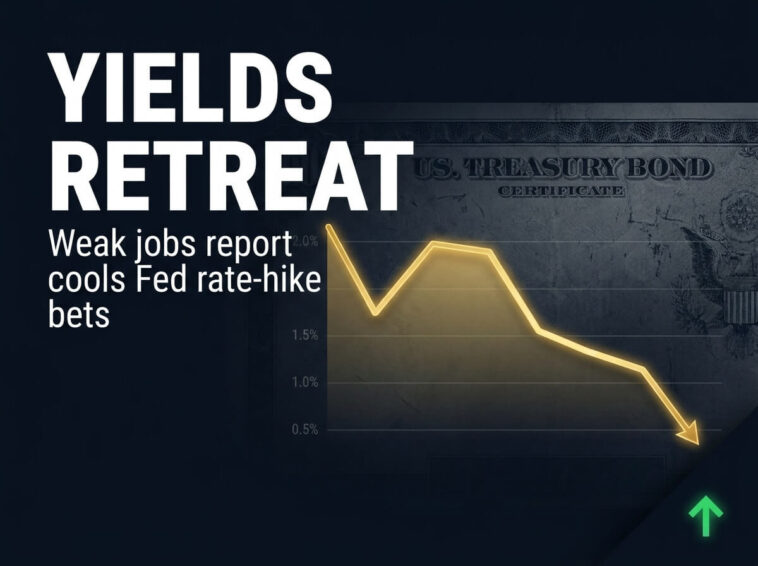
The 10-year Treasury yield fell about six basis points to 5.18% on Friday after an unexpectedly weak September jobs report cooled expectations for another Federal Reserve rate hike. The miss was wide. Employers added just 29,000 jobs, against a forecast of 84,000. CNBCCNBC
The unemployment rate edged up to 4.2% from 4.1%. Not a disaster. But the Fed watches that number closely, and it moved the wrong way for anyone betting on a hot labor market.
Stocks liked what they saw. By midday, the S&P 500 had gained 1%, the Dow was up about 300 points, and the Nasdaq Composite had climbed 1.5% to a new all-time high. Thursday’s close, for reference, was 7,666.45 for the S&P 500. CNBCCNBC
Why the 10-year Treasury yield matters this much right now
Rates have been the story all month. The Fed raised its policy rate by 25 basis points in September, and the bond market has been pricing in more. Long-dated yields climbed accordingly. On Tuesday, the 30-year yield touched 5.62%, its highest since 2002. beincryptoYahoo Finance
Why should a stock investor care? Because the 10-year is the anchor for mortgage rates, corporate borrowing costs and the discount rate analysts use to value stocks. When it rises, future profits are worth less today. Growth names feel it first. That’s the Nasdaq’s problem in a nutshell.
Friday’s data changed the arithmetic. Traders now see a high probability that the Fed holds steady at its October meeting. A pause isn’t a pivot. But after weeks of one-way bond selling, it was enough to flip the tape. CNBC
The details underneath the headline were softer still. August’s gain was revised down to 133,000, and July flipped from a gain to a loss of 10,000 jobs. Two months of quiet erosion, hidden by the first estimates. forexfactory
The counter-narrative
Not everyone is cheering. One strategist quoted by CNBC argued that the soft print undercuts the idea that the labor market is tightening again. Yet her base case stays unchanged: a follow-up hike in December, with market pressure and higher energy prices potentially forcing the Fed’s hand even sooner. CNBC
That matters. Energy is the wild card. Investors are still weighing the U.S.-Iran conflict and what it means for inflation and interest rates. If oil climbs again, the Fed’s inflation worries come back, and one weak jobs report won’t override them. CNBC
And there’s a wrinkle in the data itself. Payrolls have been erratic all year. Growth has averaged about 80,000 a month in 2026, swinging from a 156,000 loss in February to a 214,000 gain in March. One month doesn’t make a trend. The Fed knows it. So do the bond traders who’ll be back at their screens Monday. CNBC
What retail investors can do with a 5% Treasury
Here’s the practical angle. A 10-year yield above 5% is a rare thing. Savers haven’t had this option in nearly two decades. Short-term Treasury bills and notes now pay real income with the backing of the U.S. government.
Three ideas worth weighing:
Ladder, don’t lump. Splitting money across maturities (say, 6 months, 2 years and 5 years) smooths out the risk of locking in everything at the wrong moment. If yields rise again, you reinvest part of the ladder at higher rates. If they fall, the longer rungs keep paying.
Respect duration. Longer bonds swing harder when yields move. Anyone who bought long-term bond funds expecting stability has already learned that lesson. If you can’t stomach a 10% price drop, shorter maturities fit better.
Don’t abandon stocks over one headline. Friday’s rally shows how quickly sentiment can turn on a single data point. Yields near multi-decade highs are a headwind for equities, yes. They’re also a reason to check how much of your portfolio is concentrated in rate-sensitive growth names.
None of this is personalized advice. Your timeline, taxes and risk tolerance matter, and a licensed adviser can weigh them.
What to watch next
Three things will decide whether Friday’s relief lasts. First, the October Fed meeting and whether officials signal a pause or just a breather. Second, the next inflation print. Third, oil.
Wall Street got a gift on Friday. Whether it keeps it depends on data that hasn’t arrived yet.