Editor
The Ceasefire Expires Tomorrow. Iran Won’t Talk. Markets Are Bracing.
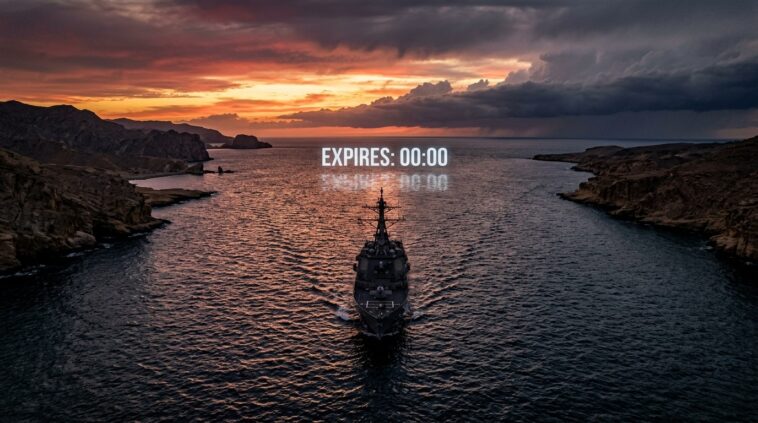
The US-Iran ceasefire expiry looming at midnight Tuesday isn’t just a diplomatic deadline. For U.S. investors, it is the single most consequential market event of the week — and possibly the month.
Iran declared the Strait of Hormuz closed again over the weekend, after briefly declaring it open on Friday — a move that had sent stock indexes soaring and oil prices plummeting 11% in a single session. NBC News That whiplash? It lasted less than 48 hours. By Monday morning, the optimism had evaporated completely.
Iran pulled out of a second round of nuclear ceasefire talks with the United States in Pakistan, throwing the fragile truce into deep uncertainty just days before it expires on April 22. Tehran’s decision came hours after President Donald Trump said American negotiators would be in Islamabad on Monday — briefly raising hopes of a breakthrough that then collapsed swiftly. Business Today
Predictable? In hindsight, yes. Jarring? Absolutely.
US-Iran Ceasefire Expiry: What the Market Is Actually Pricing
U.S. stocks fell Monday as the chaotic weekend of events reignited tensions and put peace talks at risk. The S&P 500 slid 0.28%, the Nasdaq fell 0.35%, and the VIX — Wall Street’s fear gauge — surged 8.93%. Yahoo Finance That VIX move is the number worth watching. Not the index levels. A jump of nearly 9% in implied volatility tells you traders aren’t just repositioning. They’re buying protection against something they genuinely can’t model.
Brent crude rose 4.6% toward $95 a barrel after the U.S. Navy carried out its first seizure of an Iranian vessel in the Strait of Hormuz — a move Iran immediately labeled “maritime piracy” and vowed to retaliate against. Bloomberg
The math is brutal. Just three ships were recorded crossing the Strait on Sunday — a fraction of the hundreds that would typically transit the waterway per day before the war began. NBC News Every idle tanker is a tightening supply chain. Every day without resumed oil flows is another inflation pressure point the Fed cannot fix with interest rates.
Iran blamed Washington’s “excessive demands, unrealistic expectations, constant shifts in stance, and repeated contradictions” for the breakdown — and described the American negotiating approach as “childish.” Business Today Whatever your geopolitical read, that is not the language of a country preparing to sign a deal this week.
“Markets rallied hard on peace-deal optimism for 12 straight days,” said Thomas Grenville, Chief Market Strategist at Harborview Capital Partners in New York. “That rally was pricing in a resolution that still hasn’t materialized. We’ve been playing Lucy-and-the-football for three weeks now. At some point, the risk premium snaps back hard — and today feels like the beginning of that repricing.”
The Counter-Narrative: Don’t Mistake Noise for a New Trend
Not every analyst is running for the exits.
Rebecca Solis, Senior Portfolio Manager at Cascade River Advisors in Chicago, takes a more measured view of Monday’s selloff. “This is the fourth time in six weeks we’ve had a geopolitical flare that looked like a spiral and then resolved,” she told Rise Investment News. “The ceasefire architecture is fragile, yes — but both sides have enormous economic incentive to avoid full resumption of hostilities. Iran’s own economy is hemorrhaging. My base case is still a messy, protracted negotiation — not a return to active warfare.”
Solis points to one crucial signal: a senior Iranian official had told Reuters on Monday morning that Iran was “positively” reviewing participation in new peace talks NBC News — before Trump’s announcement about the Navy seizure collapsed that window again. Both signals exist simultaneously. That contradiction is exactly the kind of environment that produces sharp intraday reversals.
The IMF warned Tuesday that global growth will take a hit even if the ceasefire holds, citing persistent Strait of Hormuz disruption as a drag on energy costs and inflation. CNBC There’s no clean outcome here — only degrees of damage.
The Macro Mechanic Every Retail Investor Needs to Understand
Here is the connection that doesn’t get enough attention in the daily headlines.
The average price of a gallon of unleaded gasoline hit $4.04 Monday, according to AAA. NBC News That number feeds directly into the CPI print the Fed watches most closely — the one that determines whether rate cuts happen this year or get shelved entirely. Trump has gone back and forth repeatedly on whether he would extend the ceasefire, offering three contradictory answers in a single press session last week. CNN That uncertainty is its own kind of inflation. Markets can’t price a range that wide.
Craig Johnson, Chief Market Technician at Piper Sandler, put it plainly in a note to clients: “The equity market’s rapid 12-day transition from oversold to overbought masks a precarious macro reality, especially with crude oil above $90 per barrel. The mixed signals from short-term strength and lagging breadth create a highly fragile technical foundation.” CNBC
Fragile foundation. That’s an understatement on a day like today.
What to Do With Your Portfolio Before Wednesday
Be specific. This is not a moment for vague diversification advice.
Energy stocks remain the clearest defensive hedge. Domestic producers — ExxonMobil, ConocoPhillips, Devon Energy — benefit directly from elevated oil prices and are insulated from Hormuz disruption that hammers foreign-sourced supply. If the ceasefire collapses and oil retests $100, these names provide ballast.
Watch the 10-year Treasury yield, not just the stock indexes. If oil stays above $90 into a ceasefire breakdown, inflation expectations will reprice the yield curve higher, compressing valuations in rate-sensitive growth stocks. Tech, utilities, and REITs face the most asymmetric downside in that scenario.
Trim outsized winners from the 12-day rally selectively. The Nasdaq ran more than 5% in a single week on peace-deal optimism. Some of that premium needs to come out if Wednesday brings bad news. This is not a call to sell. It’s a call to rebalance, not chase.
The ceasefire expires in less than 24 hours. Iran won’t talk. Three ships crossed the world’s most critical waterway yesterday.
Pay attention to Wednesday morning.