Editor
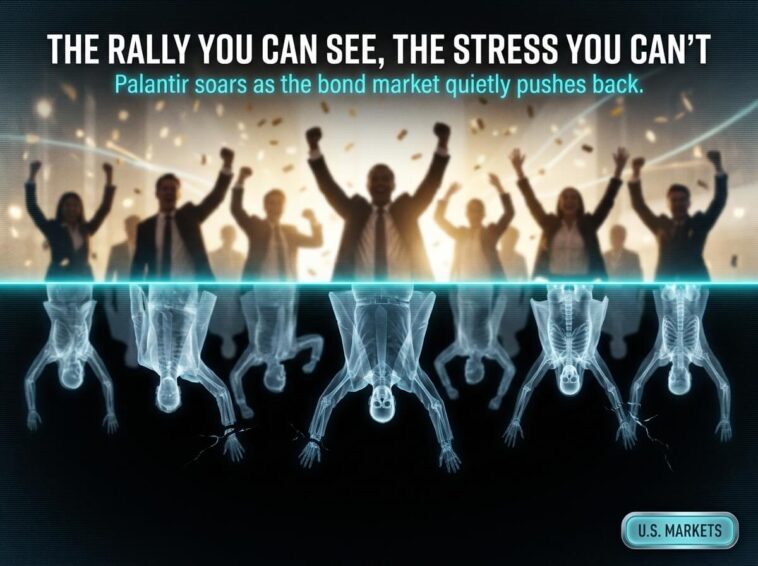
Palantir Stock Soars 15%. The Bond Market Isn’t Nearly as Excited.
Palantir stock jumped 15.4% Tuesday. The Dow hit a record. The S&P topped its June high for a fourth straight session. Oil kept sliding on hopes for an Iran deal.
Everything up top looked like a party.
Underneath it, something quieter and more consequential was happening. Investors were quietly dumping dividend stalwarts like UPS and Nike, not because those companies stumbled, but because the bond market has started pushing back against Fed Chair Kevin Warsh’s hard-line inflation stance. That’s a very different story than the one dominating headlines Tuesday morning.
Why Palantir Stock’s Surge Sits Alongside a Bond Market Warning
Palantir’s move wasn’t isolated. Its AI platform reported accelerating demand, and the enthusiasm spilled across the sector. Micron rose 4.3%. SanDisk climbed nearly 6%. A semiconductor-tracking ETF gained over 4%. Caterpillar, an unlikely AI beneficiary, jumped 12% after topping $20 billion in sales for the first time. Interestingly, Microsoft dipped 1.5% the same morning, as capital rotated out of the safer mega-cap and into riskier, higher-beta AI names like Palantir instead.
“This is a market that’s decided the AI trade isn’t over, it’s just changing leadership,” said Marcus Thorne, Head of Macro Strategy at a New York boutique advisory firm. “Money moving from Microsoft into Palantir isn’t fear. It’s traders chasing acceleration, not stability. But zoom out to the bond market, and you’ll see a very different mood. Yields aren’t falling the way you’d expect during a genuine risk-on rally. That gap between equity euphoria and bond market skepticism is the real story today, not Palantir’s fifteen percent pop.”
Here’s the mechanism worth understanding. Warsh has held a firm inflation line since taking the Fed chair. The bond market, according to Tuesday’s reporting, is starting to doubt that stance holds, and that doubt is showing up in unexpected places. UPS’s dividend yield has climbed to 6.4%, with payments approaching parity with free cash flow, a red flag for sustainability. Nike’s 24-year streak of dividend increases is now facing real scrutiny. Investors aren’t fleeing these names because the businesses broke. They’re fleeing because bond-market-driven yield pressure is making dividend safety look shakier across the board.
The Skeptic Who Says the Rotation Story Is Overblown
Not every strategist reads Tuesday’s dividend-stock exodus as a warning sign.
“People are drawing a straight line from two struggling dividend payers to some grand bond market rebellion against the Fed chair. That’s a stretch,” countered Elena Voss, senior equity strategist at a Chicago research shop. “UPS and Nike have had payout ratio problems building for years, well before Warsh took the job. Rolls-Royce just raised its full-year outlook and trades at fifty-one times earnings without anyone calling that a crisis. Some dividend names are genuinely stretched. That’s not the same as the whole bond market losing confidence in the Fed.”
Voss has a fair point. Payout sustainability concerns at UPS and Nike predate this specific news cycle. But the timing, both stocks seeing fresh selling pressure the same week bond market skepticism toward Warsh gets reported, is hard to write off entirely as coincidence.
What This Means for Your Portfolio
Here’s the practical takeaway, and it’s more nuanced than “buy the AI rally.”
Record highs in equities and quiet stress in the bond market can coexist, and Tuesday is a clean example of exactly that. Palantir’s surge reflects genuine enthusiasm for AI monetization acceleration. The UPS and Nike selloffs reflect a separate, more structural worry about whether current yield levels are sustainable for dividend-dependent stocks if the Fed stays hawkish longer than the market wants.
For retail investors holding dividend names for income, this is worth a real look, not a panic. Check the payout ratio relative to free cash flow on anything yielding above 5%, especially if that yield climbed recently rather than reflecting years of steady dividend growth. A rising yield can mean a rising dividend, or it can mean a falling stock price making an unsustainable payout look attractive on paper. UPS and Nike are showing signs of the latter.
Meanwhile, if you’re chasing Tuesday’s AI momentum into names like Palantir, remember this month’s pattern: enthusiasm has moved fast in both directions all summer. AMD and SpaceX both report after today’s closing bell. Either could extend Tuesday’s rally, or reset it entirely, the same way results have swung sentiment for five straight weeks now.
Watch the bond market, not just the record highs. Tuesday’s real signal wasn’t Palantir. It was the quiet stress showing up somewhere nobody was looking.