Editor
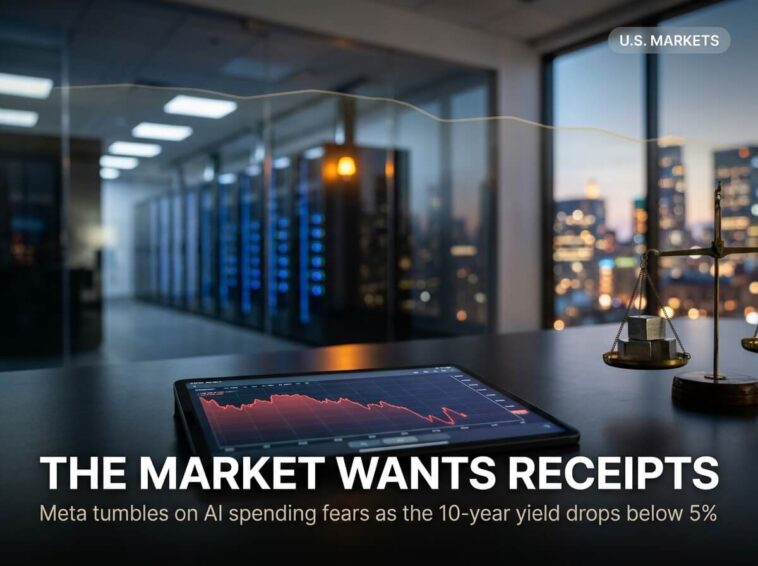
Meta Stock Tanks as AI Spending Fears Hit Wall Street, and the 10-Year Yield Drops Below 5%
Meta stock gave up about 7% Thursday, and the AI trade went down with it. Strong earnings didn’t matter.
By midafternoon, the Nasdaq Composite had sunk 2.4% to roughly 26,057. The S&P 500 lost 1.3% to about 7,660. The Dow, anchored by non-tech names, slipped just 0.1%. The VIX, Wall Street’s fear gauge, jumped nearly 15% to 19.11. Bitcoin fell below $82,000.
The day started well enough. Meta reported third-quarter revenue of $64.6 billion, up 26%, and beat expectations. Shares rose after the bell Wednesday. Then reality arrived. By the open they were down more than 3%, and within half an hour they’d slid 6%.
Why Meta Stock Fell Despite a Strong Quarter
Money. Specifically, how much Meta plans to spend.
The company spent $34.91 billion on capital projects in the quarter and narrowed its 2026 range to between $135 billion and $145 billion. It also signaled substantially heavier investment in 2027. Meta announced a 2-for-1 stock split, too, plus a new non-voting share class that could help finance future spending. None of that calmed investors who are asking one question: when does all this AI spending turn into profit?
Tesla showed the flip side. It beat on adjusted earnings, 48 cents a share against 44 cents expected, with revenue near $28 billion. It also cut its 2026 capital spending forecast to about $20 billion. Yet investors fretted about heavier spending in 2027 and 2028 on Optimus, the Cybercab and a project called Terafab. Shares were volatile all day, down about 2% by the afternoon.
Spend a lot, and the market worries. Spend less, and it worries about growth. That’s an unforgiving crowd.
SpaceX stock, which jumped after Wednesday’s profit beat, fell about 7.6% and gave back more than half of that gain. Chip equipment makers were hit hard, with Lam Research down roughly 9% after its report and Applied Materials and KLA off about 6%.
“The market has stopped rewarding AI spending and started demanding receipts,” said Laura Penhale, head of technology research at a Manhattan brokerage. “Revenue growth of 26% should be a victory lap. Instead, investors are staring at a capital bill that keeps getting bigger and asking who pays it back.”
Bonds Rally, and Oil Isn’t the Story
Here’s the twist. Oil spiked, and Treasury yields tumbled.
Brent crude climbed to about $112 a barrel, its highest since May and up more than 50% since the Iran war began in late February. A report that the U.S. and Israel are preparing renewed attacks on Iran after the November 3 midterms pushed prices up, and attacks on a Saudi airport and Aramco oil field added fuel. West Texas crude hovered near $100.
Normally that sends yields higher, because oil feeds inflation. Instead, investors ran for safety. The 10-year Treasury yield dropped below 5%, to around 4.97%, on pace for its biggest one-day decline in more than two years. The 30-year fell to roughly 5.3%.
Inflation expectations barely moved. The bond market’s gauge of five-year inflation is actually a bit lower than it was before the war. So the climb in yields since February has been mostly about real rates, meaning what investors demand after inflation, not fear of rising prices. Bond traders seem to bet the Fed will keep policy tight enough that $110 oil doesn’t become lasting inflation.
Not everyone buys that. A Bloomberg strategist argues the bond market is mispricing the oil shock. And France’s 10-year yield now sits above America’s for the first time since 2013, a sign of strain overseas.
The Fed, led by Chair Kevin Warsh, decides on October 28. Jobless claims fell to 194,000 last week, the fewest in three months, so the labor market gives the central bank little reason to ease.
The Counter-Narrative: Buy the Dip?
Not everyone is heading for the exits.
“Revenue is growing 26%, and the market is selling it like a disaster,” said Gary Whitcomb, a portfolio manager at a Denver fund. “Semiconductor funds took in record money last week because long-term buyers see this as a discount. I’ve seen these air pockets before. Capital spending now becomes earnings power later, as long as demand holds.”
He has a point. Dip buyers have appeared repeatedly during this slide. But chips just broke below a key support level, and the semiconductor ETF is heading for its lowest close since July 29. Buying early has worked before. It doesn’t always.
What Retail Investors Should Do Now
None of this is personal advice. It’s a checklist.
First, don’t trade the headline. Meta rose after hours and fell the next day. Chasing earnings-night moves is a good way to buy high and sell low.
Second, check your concentration. As one strategist put it Thursday, every index is basically an AI index. If an S&P 500 fund, a Nasdaq-100 fund and a tech fund sit side by side in your account, one theme may drive most of your returns.
Third, understand the bond rally. Falling yields lift bond prices, which helps anyone holding existing bonds. But the drop is happening because investors are scared, not because inflation is solved. Treat it as a warning light, not an all-clear.
Fourth, keep a cushion. Short-term Treasuries and cash offer stability when stocks swing 2% in a day. Check current rates before choosing.
Fifth, spread out purchases. If you’re adding to stocks, buying in pieces over weeks beats guessing the bottom.
What Comes Next
The Fed meets in six days. Midterm elections arrive November 3, with Iran tensions tied to what follows. More big tech earnings are coming, and each will answer the same question: is AI spending a bargain or a bill?
The Fed’s stance? Firm, yet under watch. The AI trade’s stance? Shaken, again. The market will keep grading on spending until profits catch up.